
Voice, Vision & AI: The Future of Search Marketin

Welcome to the Post-Keyword Era
Search marketing is transforming at lightning speed. We no longer live in a world where keyword stuffing gets you clicks. Today’s digital consumers are speaking to smart devices, snapping photos to search, and using AI to answer their questions.
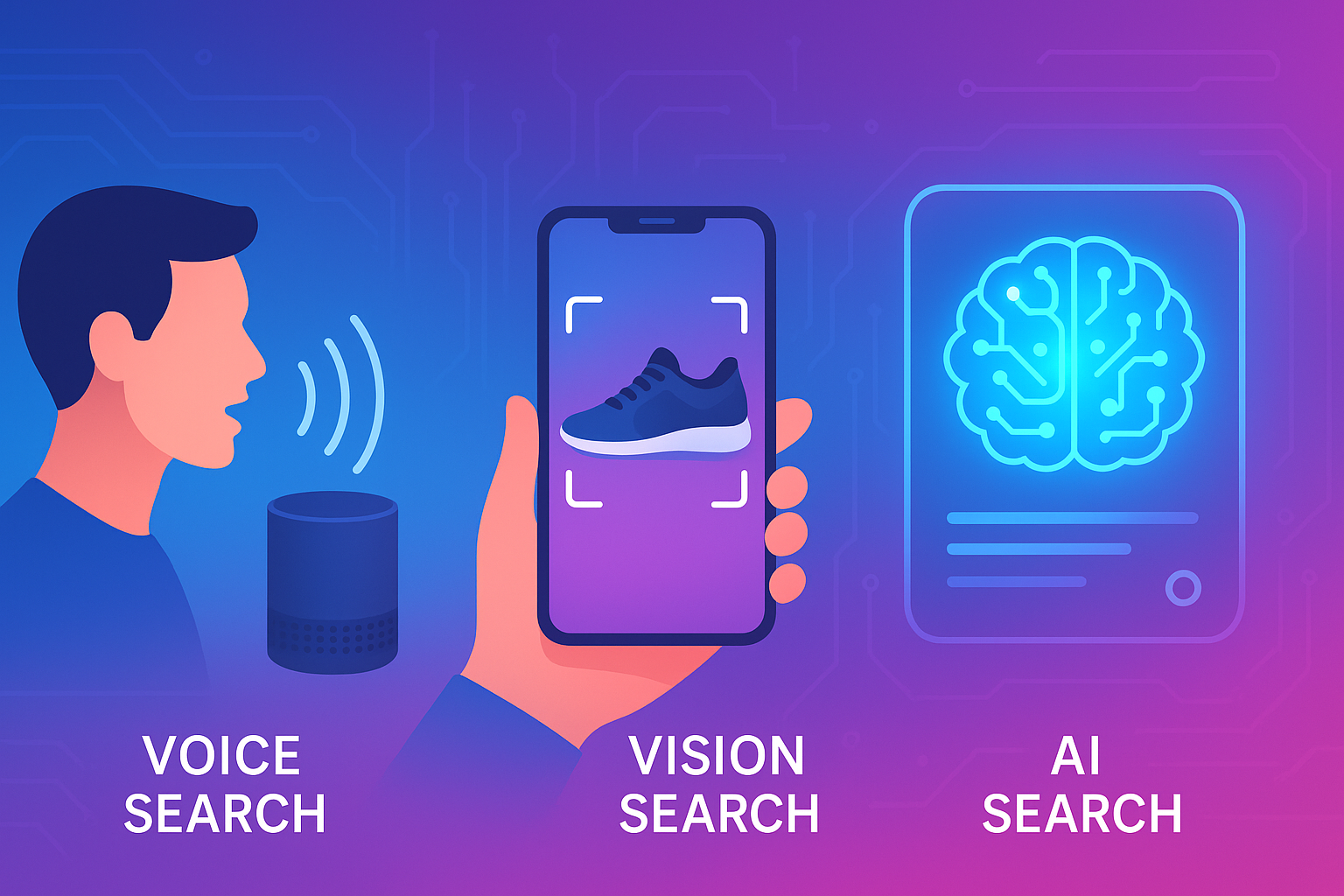
The future of SEO is multimodal. It’s powered by voice, vision, and AI. Brands that want to be discovered must evolve with this shift. Search is no longer about keywords alone, it’s about understanding intent, context, and experience.
When Keywords Aren’t Enough Anymore
There was a time when stuffing pages with keywords could win the SEO game, but that era is long gone. Search engines like Google now prioritize value, relevance, and user intent over simple keyword matching.
AI-driven algorithms analyze why a user is searching, not just what they typed. Whether someone is training for a marathon, shopping on a budget, or looking for a gift, search engines aim to deliver contextually accurate answers.
This shift demands a new mindset: creating meaningful, intent-driven content that genuinely helps users rather than just ticking SEO boxes.
From Typed Queries to Multimodal Search
Search has expanded far beyond typing keywords into a search bar. Today’s users speak, snap photos, and combine multiple inputs to find what they need.
Modern search includes voice search through assistants like Alexa and Siri, visual search through tools like Google Lens and Pinterest, AI-powered search experiences, and exploratory search journeys where users seek guidance rather than direct answers.
Each of these modes creates new opportunities for brands to connect with users in more natural and engaging ways.
Voice Search: Conversations with Technology
Voice search allows users to speak naturally to devices, asking questions like “What’s the best café near me right now?” instead of typing short phrases.
Powered by Natural Language Processing (NLP), voice assistants understand context and deliver accurate, conversational answers. For businesses, this makes conversational content, long-tail keywords, and strong local SEO more important than ever.
If you want your brand to be the answer, your content needs to sound more human.
Visual Search: See It, Search It
Visual search enables users to upload images and instantly find relevant results. Platforms like Google Lens and Pinterest Lens analyze images using computer vision to identify objects, styles, and context.
This is a game-changer for industries like fashion, food, travel, and home décor. Brands must optimize images with high quality visuals, descriptive alt text, structured data, and rich metadata to remain visible.
When users search with their eyes, your visuals should do the talking.
AI-Powered Search: Smarter Than Ever
AI-powered search tools like ChatGPT, Google’s Search Generative Experience, and Perplexity AI are redefining how results are delivered. Instead of blue links, users now receive summarized, conversational answers.
This means content must be well-structured, authoritative, and machine-readable. Marketers should focus on EEAT—Experience, Expertise, Authority, and Trust—while using schema and structured data to help AI understand and surface their content.
Multimodal Search: One Search, Many Inputs
Multimodal search blends text, voice, images, and video into a single experience. Users might upload an image, ask a question, and receive tailored results all at once.
AI systems like Gemini and GPT-4o process multiple inputs simultaneously, understanding complex intent. To succeed, brands must optimize content across formats—text, visuals, video, and voice—ensuring accessibility and consistency everywhere.
Why This Shift Matters for SEO
Modern search delivers real business value. It enhances user experience, increases visibility across less competitive channels, and drives deeper engagement.
Brands that adapt early gain a future-proof SEO strategy, staying ahead of evolving digital trends. The transformation is already underway—the real question is whether your brand is ready to be part of the future of SEO.